
Description
1. Introduction to Ultrasonic Doppler Flow Meter MT-F100UL
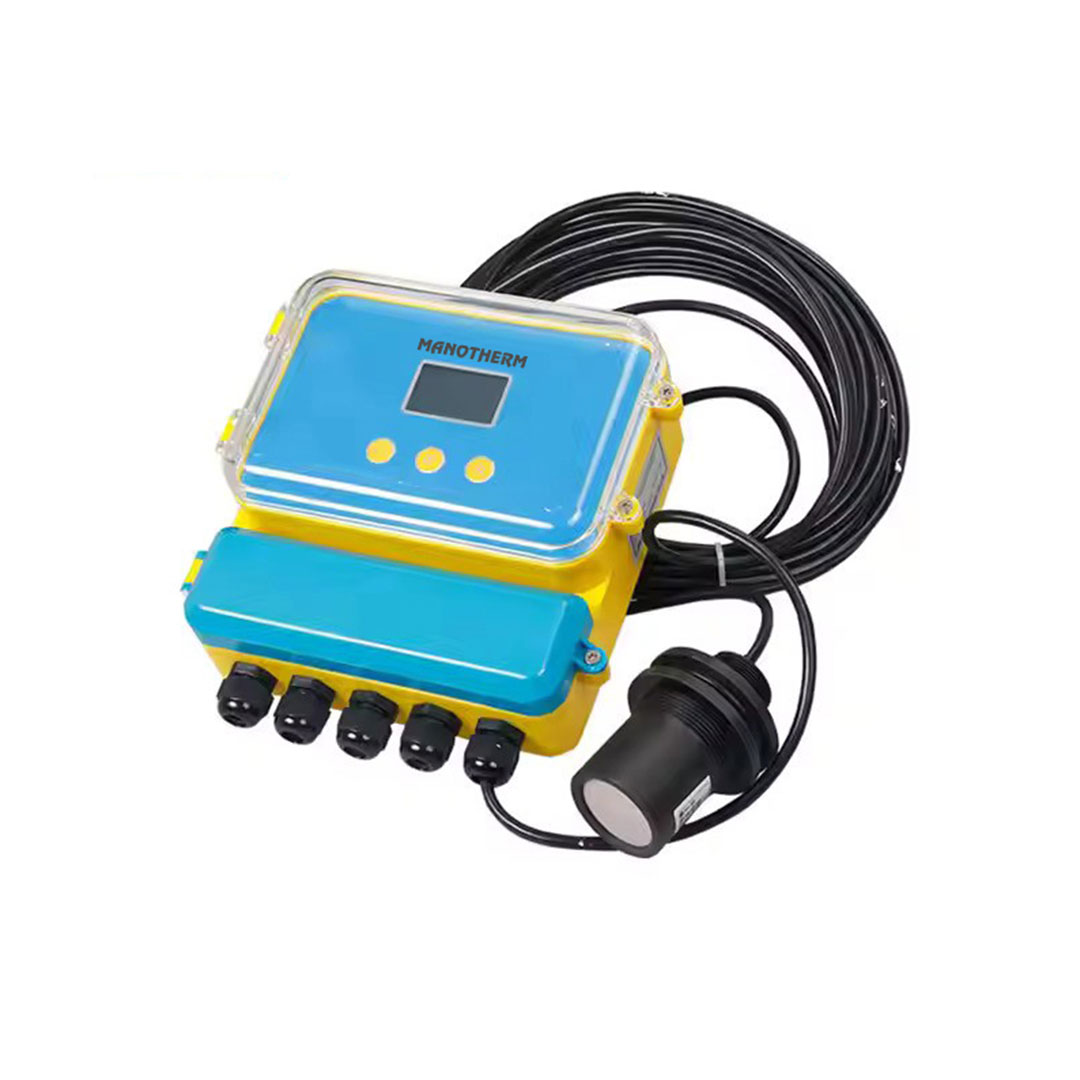
Ultrasonic Doppler Flow Meter MT-F100UL is a high-performance flow measurement device designed for applications where liquids contain suspended particles, gas bubbles, or impurities that can reflect ultrasonic signals. Unlike transit-time ultrasonic meters that require clean liquids, this Doppler-type flow meter is ideal for wastewater, raw river water, slurry-rich industrial fluids, and many natural flow environments. The system is divided into two main components: the sensor and the host unit, which are connected via cable, allowing convenient and flexible installation even in challenging field environments.
The meter is capable of measuring both flow velocity and water level to determine volumetric flow rate accurately. To ensure stable readings, the water level must be at least 20 cm higher than the sensor when used in channels, rivers, culverts, or pipelines. Additionally, when installed inside piping systems, the internal diameter must be 500 mm or greater to ensure proper signal reflection and reliable velocity calculation.
Because of its ability to measure in open channels, natural streams, sealed pipelines, and drainage systems, Ultrasonic Doppler Flow Meter MT-F100UL is widely used in hydrology monitoring, agricultural irrigation systems, water conservancy engineering, environmental wastewater monitoring, flood control systems, and industrial liquid flow tracking. The non-intrusive design, excellent efficiency, and reliable long-distance signal transmission make this model suitable for both temporary measurement and continuous long-term monitoring.
2. Working Principle and Functional Features
Ultrasonic Doppler Flow Meter MT-F100UL works based on the Doppler effect principle. A high-frequency ultrasonic wave is emitted from the sensor into the moving liquid. When the sound wave encounters particles or tiny air bubbles suspended in the flow, it reflects back with a shifted frequency depending on the velocity of the flowing medium. By analyzing this frequency shift, the meter calculates the average flow velocity. When combined with water level or pipe dimension data, the device computes the actual flow rate.
One of the key advantages of this meter is that it does not require direct contact with fluid, mechanical moving components, or flow interruptions. This significantly reduces maintenance requirements and prevents scaling or fouling problems. Due to its split-structure configuration, the host unit can be placed at a convenient location for monitoring and data analysis while the sensor remains installed near the flow area.
Another major strength of the Ultrasonic Doppler Flow Meter MT-F100UL is its adaptability to complex flow conditions. It can operate in turbulent flow, uneven liquid distribution, and environments with solid particle content. Additionally, the meter provides multiple output signal formats including RS485 and 4-20 mA, making integration with SCADA systems, PLC controllers, and remote monitoring platforms straightforward.
3. Applications of Ultrasonic Doppler Flow Meter MT-F100UL
Ultrasonic Doppler Flow Meter MT-F100UL is widely used in various industrial and environmental fields due to its adaptability and precision. It is often installed in rivers, open water channels, irrigation canals, urban drainage systems, pipelines, and industrial wastewater discharge lines. Because it can accurately measure flow rates without requiring the medium to be clean, it is suitable for natural flow bodies and contaminated water streams.
In hydrology and water conservancy systems, the meter is used to monitor seasonal flow changes, flood and irrigation planning, and reservoir discharge control. In environmental and municipal wastewater management, it helps track raw sewage transport, sludge movement, and drainage flow behavior. The device is also used in industrial sectors such as chemical processing, steel manufacturing, cooling water systems, and pulp and paper production, where liquids frequently contain suspended materials and require stable flow monitoring.
4. Advantages in Monitoring and Data Management
The Ultrasonic Doppler Flow Meter MT-F100UL supports real-time display and output of flow velocity, instantaneous flow rate, cumulative flow, water level, and temperature. Data can be transmitted externally for central monitoring or data logging. This makes the meter suitable for both standalone operational control and integration into automated monitoring networks.
The split-type configuration allows the user to place the display and controller in an accessible area, protecting it from flooding, harsh weather conditions, and difficult installation points. Calibration and configuration are simple, and the system offers stable performance even under fluctuating environmental conditions.
5. Standard Parameters Table
| Specification | Description |
|---|---|
| Structure Type | Split Structure |
| Measurement Categories | Flow Velocity, Flow, Water Depth, Water Temperature |
| Protection Level | IP68 |
| Measuring Purpose | On-line flow measurement |
| Velocity Range | 0.04 m/s ~ 5.00 m/s (other ranges customizable) |
| Velocity Resolution | 1 mm/s |
| Velocity Accuracy | ±2% ~ ±4% of measured value |
| Water Depth Range | 0.02 m ~ 10.00 m |
| Water Depth Resolution | 2 mm |
| Accuracy | ±0.5% |
| Temperature Range | 0 ~ 60°C |
| Temperature Resolution | 0.1°C |
| Flow Range | 10 L/s ~ 99,999,999 m³/h |
| Power Supply | 12 VDC Battery; 11~14 VDC external power |
| Output (Communication) | RS485 |
| Output (Analog) | 4-20 mA instantaneous flow |
| Cable Length (Sensor to Transmitter) | 10 meters standard |
| Liquid Requirements | pH 6~8, Temperature 0~50°C, standard atmospheric pressure |
6. Conclusion
Ultrasonic Doppler Flow Meter MT-F100UL provides a reliable, accurate, and maintenance-efficient solution for measuring flow in liquids containing suspended particles or mixed-phase conditions. Its versatility allows it to be used in natural water bodies, industrial pipelines, and municipal fluid transport networks. The device’s split design, digital communication capabilities, and high adaptability make it ideal for modern flow monitoring systems.